
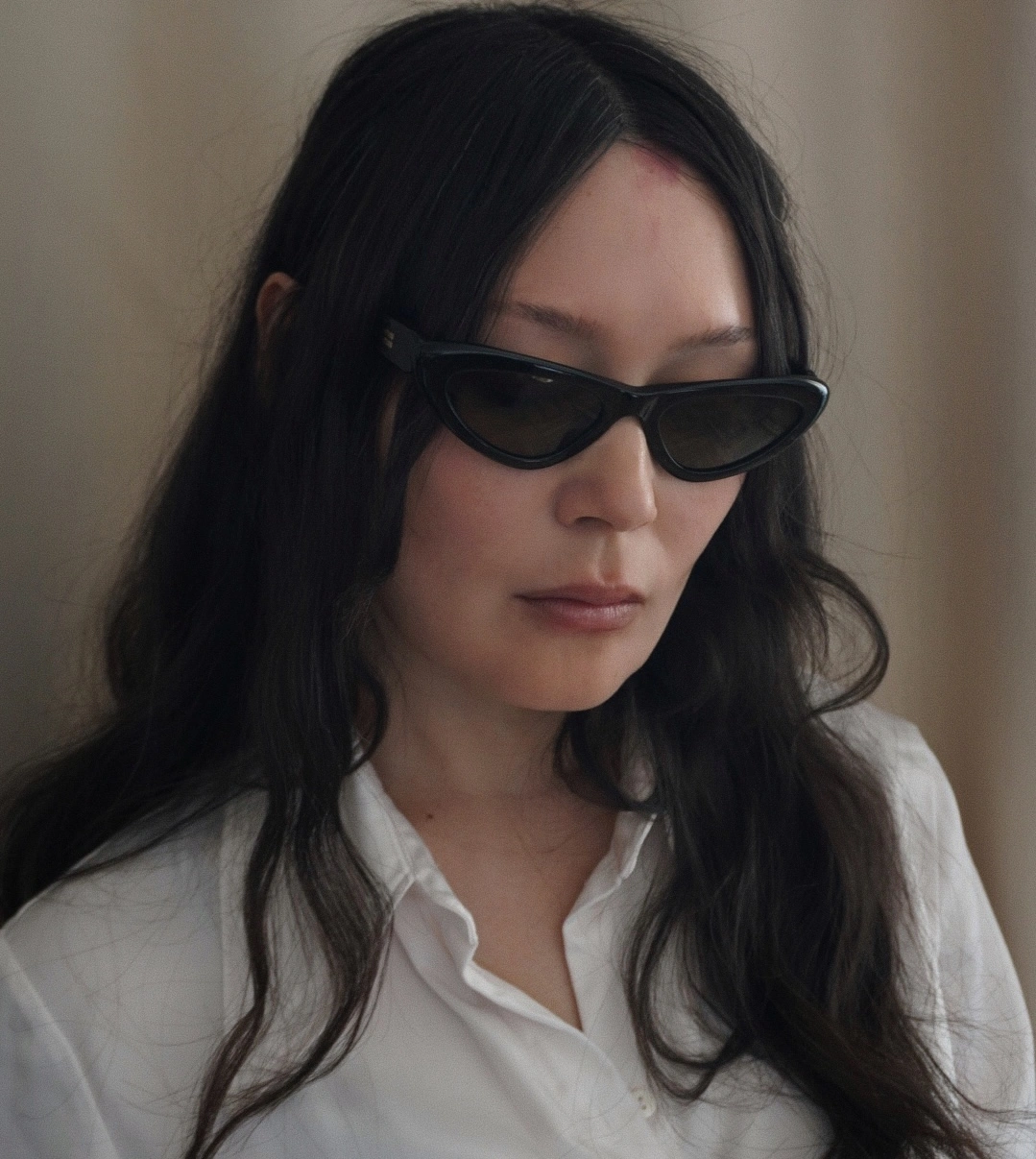
The Aesthetics of Numbness
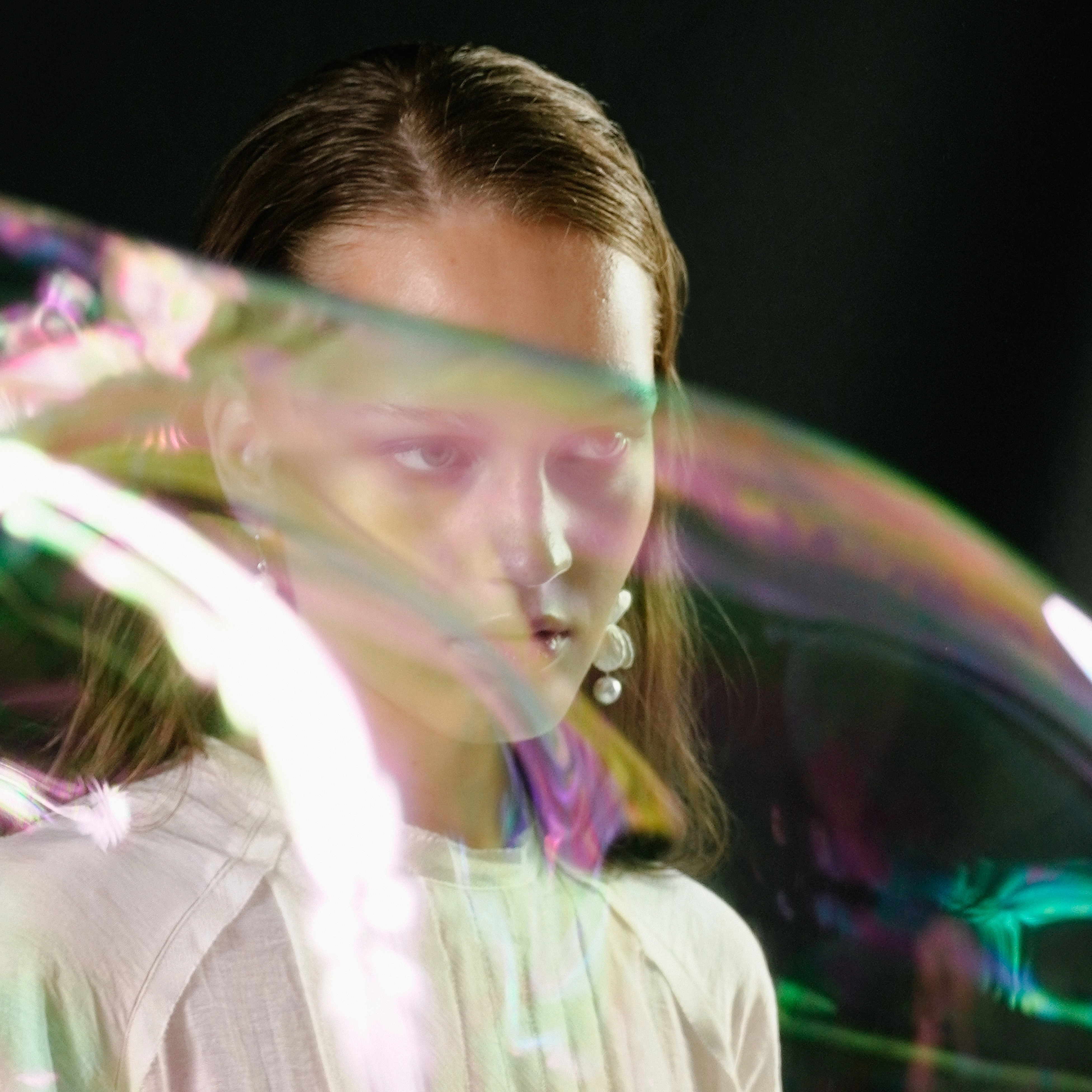
Why the expressionless face became the new beauty ideal and what it reveals about how we view women’s emotions
“It neither comes into being nor passes away, neither grows nor diminishes,” Diotima says of beauty in Plato’s Symposium. Two and a half thousand years later, this idea has taken on an unexpectedly literal form. We have learned to preserve a face almost exactly as it looked years ago, as though beauty truly ought to exist outside time.
There is something both mesmerising and unsettling about it.
The modern beauty industry sells us youth, but what we receive is stillness. Not simply the absence of wrinkles, but a particular expression: calm, smooth, composed, revealing very little.
Botox erases the signs of age from our faces, but it also restricts the movement of the muscles that allow our expressions to change with our moods. We tend to think of facial movement as something insignificant, even though it is an essential form of communication that requires no words: “I’m happy to see you,” “I’m scared,” “I’m angry,” “I’m tired,” “Are you serious?”
Consider the history of women’s emotions.
For centuries, women have been accused of feeling too much. Women’s anger was labelled hysteria, tears were treated as weakness, and intense reactions were dismissed as irrational. The word “hysteria” itself comes from the ancient Greek hystera, meaning “womb,” and was historically used to explain women’s behaviour through their bodies. In the eighteenth century, French physician François Boissier de Sauvages classified even tears, laughter, and yawning as symptoms of hysteria. Women’s emotions were turned into a diagnosis.
Today, no one asks women to stop feeling. The demand is subtler: do not show it. Do not frown. Do not crease your forehead. Do not look tired. Do not let irritation spoil your face. Do not let sadness settle around your eyes.
Across our feeds, a new idea has begun to circulate: numb femininity. It is an aesthetic in which attractiveness is associated not with expressiveness, but with the absence of reaction. It echoes the recently popular lobotomy chic, as well as the romanticisation of beta blockers and actress Rachel Sennott’s declaration, “Numb is in!”
Increasingly, we fantasise about a woman who never needs to feel anything too intensely. She is calm. She does not age, sweat, blush, cry, or lose control. There is something in her of a perfectly retouched image and, increasingly, of the perfect digital companion. It is no coincidence that the cult of the smooth face is growing alongside the popularity of AI girlfriends. Women are imagined as increasingly accommodating, predictable, and stripped of the very thing that makes relationships difficult: a genuine reaction.
In this context, the death mask becomes an unexpectedly precise metaphor for contemporary beauty. It preserves a person’s face, but not the person. The expression remains, while movement disappears. The form outlives whoever once inhabited it.
This is not to suggest that Botox turns us into robots or that every injection is an act of surrender to the patriarchy. People have the right to change their appearance however they wish. The desire to look younger is not, in itself, something to condemn.
The more interesting question is this: why has stillness become the ideal?
Stillness is easier to control. A face that reveals no emotion is harder to read. It does not argue, object, show exhaustion, or demand attention. It is a remarkably convenient form of beauty, especially when we remember how many centuries women have spent being told that their emotions are too loud, unpredictable, and uncomfortable.
A wrinkle may be nothing more than a fold in the skin, but it is also evidence of a life lived: laughter, anger, surprise, anxiety. We are so afraid that time will leave its marks on us, as though there were something shameful about them. The ability to change and reveal an inner state is precisely what distinguishes a human face from a perfect photograph. It never remains unchanged, and that is what separates it from a mask. Perfect smoothness may look flawless, but only a living face can change with the person it belongs to.